
By the time a customer asks an AI assistant where to take a client, find a quiet date-night table, or eat near a particular MRT station, they are not looking for a restaurant homepage. They are narrowing a decision. The answer may weigh cuisine, price range, location, dietary needs, booking options, and whether the place is open. For a Singapore restaurant, AI visibility begins with public information that stays clear across those practical questions, not with a promise that an AI platform will choose the business every time.
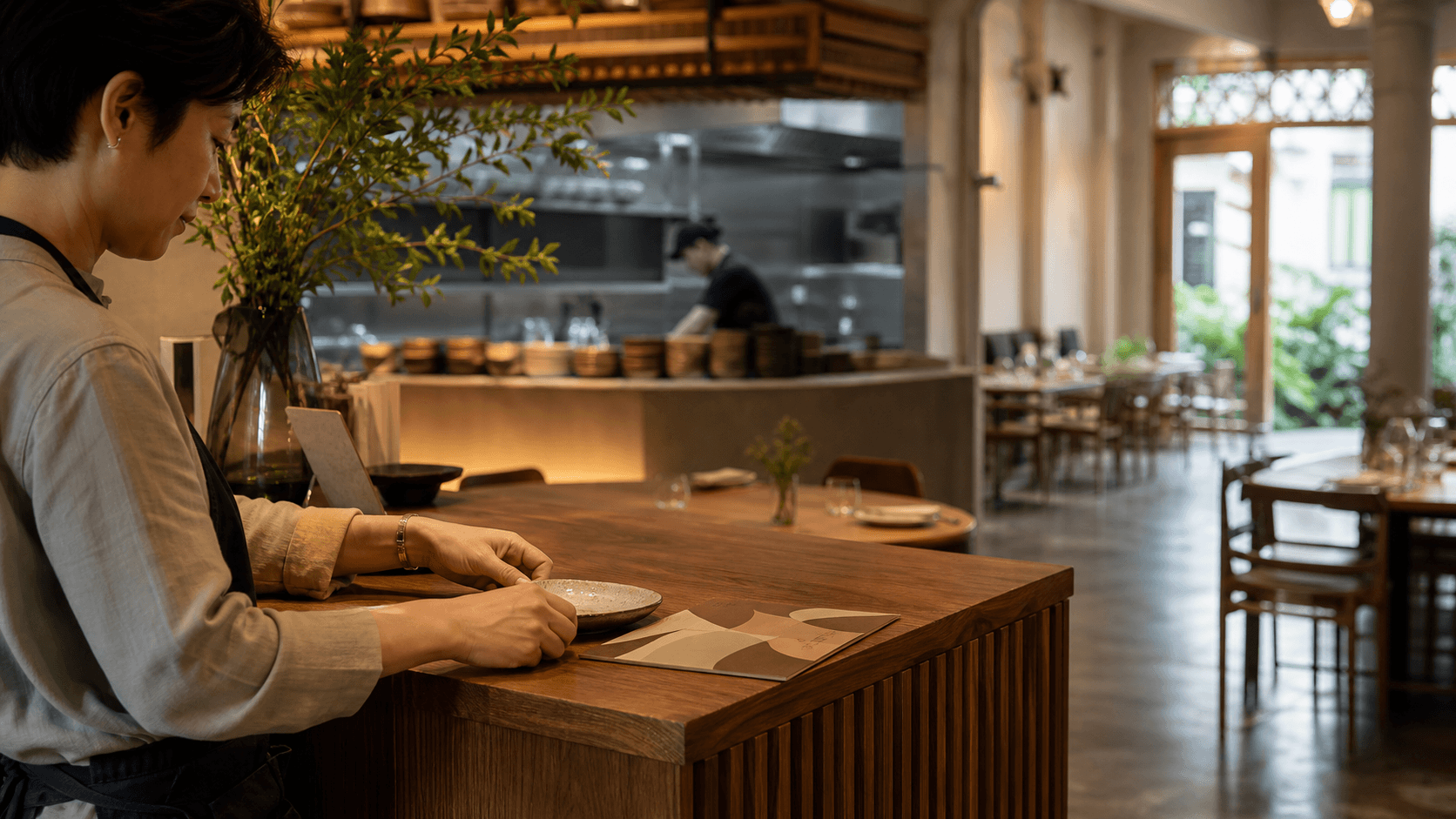
Dining queries combine location, occasion, budget, cuisine, timing, and practical needs long before a customer knows a restaurant name.
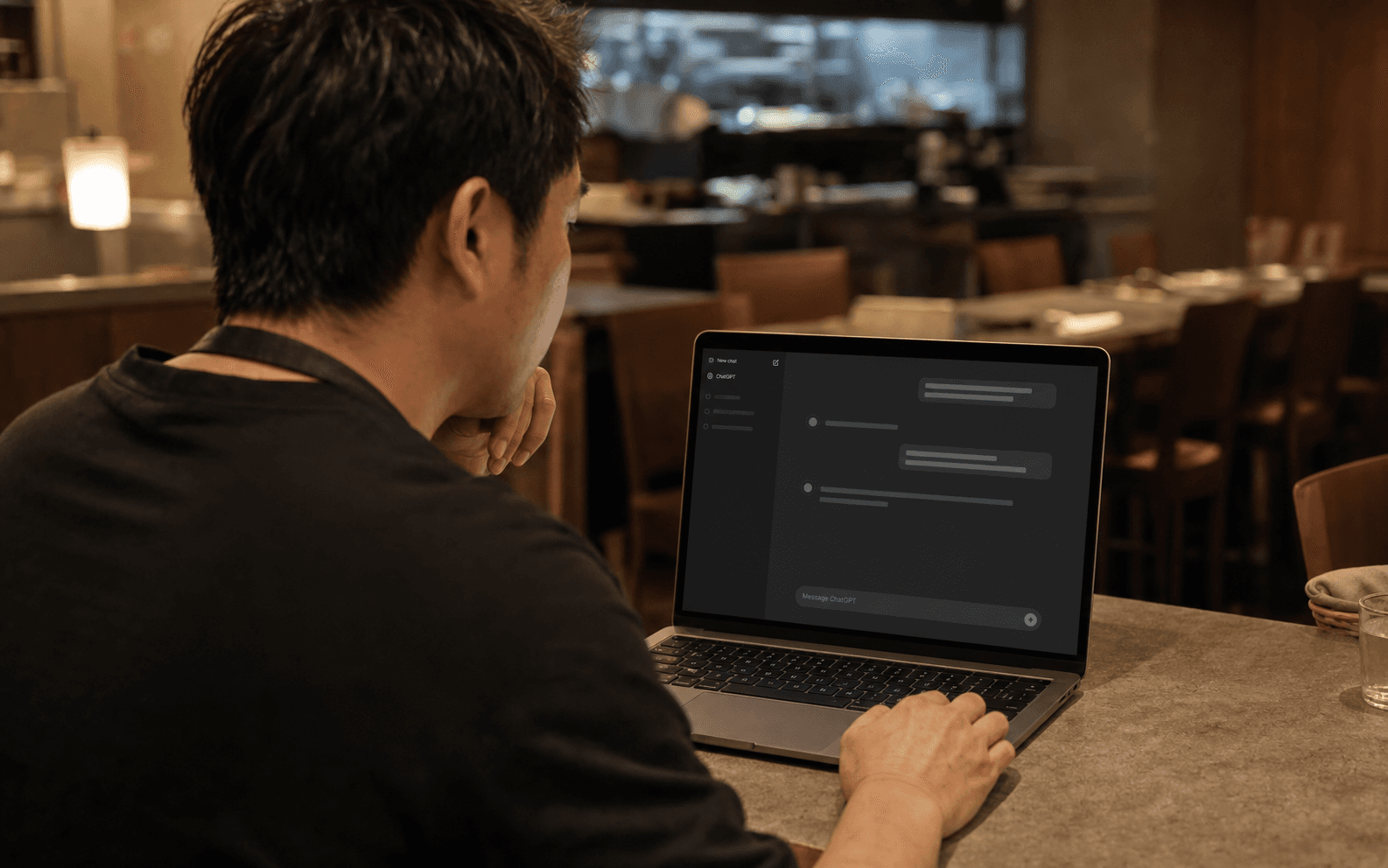
Menus, branch details, opening hours, booking paths, and dietary information are easier for AI to use when they are specific and consistent across public sources.
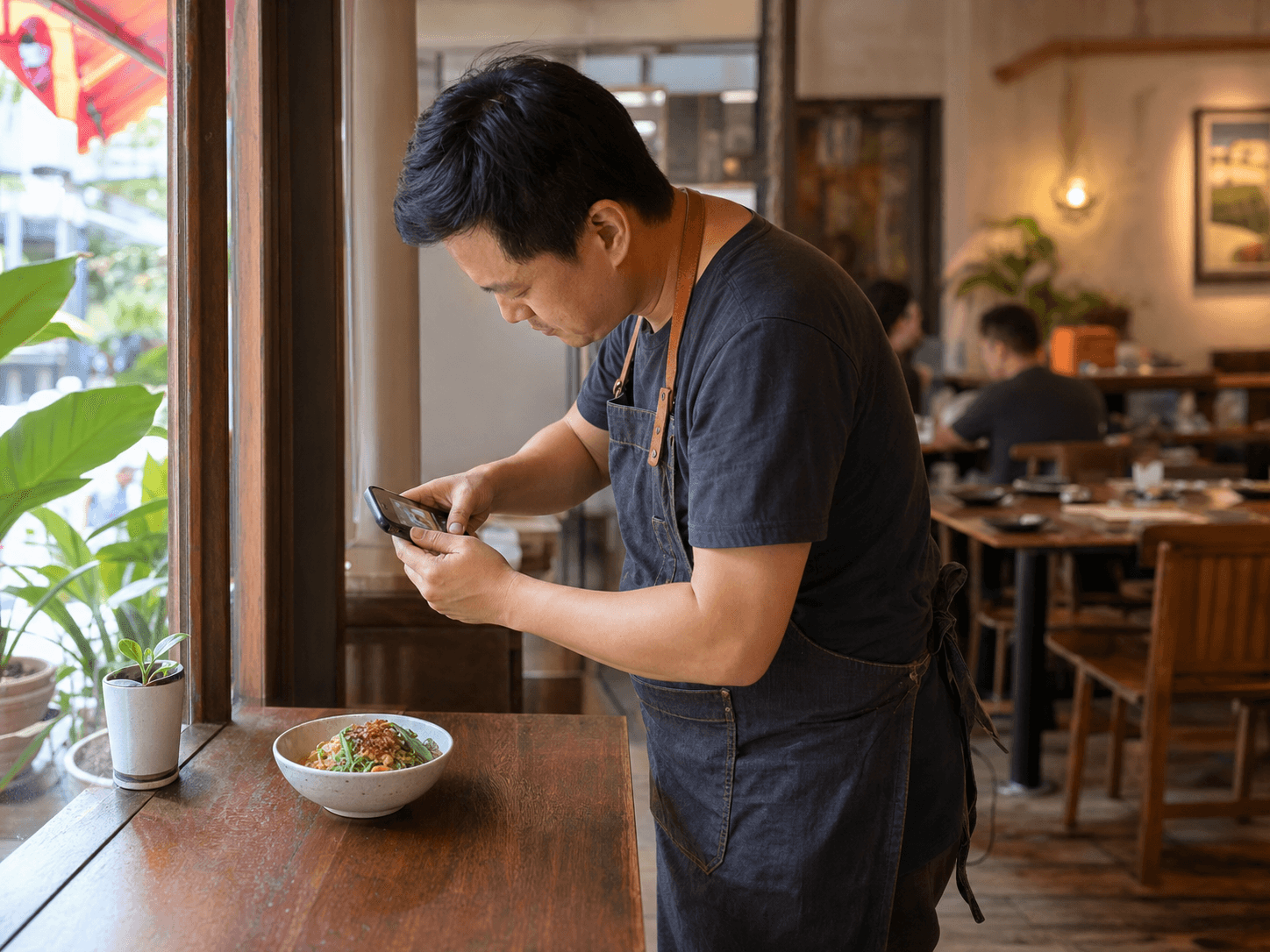
A repeatable AI visibility check turns one answer into dated evidence and a concrete restaurant-information task, rather than a claim about future bookings.
"Where can I take colleagues for a quiet dinner near Tanjong Pagar?" is not one restaurant query. It combines a neighbourhood, a group setting, a time of day, a likely budget, a desired atmosphere, and an implied need to reserve. A different customer may ask for a casual halal-friendly lunch, a late dessert, a family meal near an MRT station, or somewhere suitable for visitors from overseas. Each qualifier changes which public details matter.
That is why a branded search is only a small part of restaurant visibility. It can show whether an AI system recognises a restaurant name, but it does not show whether the restaurant makes sense before the customer has chosen a brand. Category and occasion questions are where the menu, practical constraints, and local context begin to carry real weight.
Restaurant owners do not need to write for every imaginable prompt. They do need to make the recurring decisions easy to verify. A concise statement of cuisine is more useful than a slogan. A page for each branch is more useful than one address hidden in a footer. A clear reservation route is more useful than asking a customer to hunt through several social profiles.
AI platforms may bring together information from a restaurant website, maps, booking services, menus, editorial coverage, and public profiles. That does not mean they can reliably repair contradictions. When one source says a branch opens at noon, another says 11:30, and a third lists the wrong neighbourhood, the platform has less dependable context for a customer-facing answer.
The goal is not to force a perfect profile into every platform. It is to keep the useful facts owned, current, and easy to find. Start with the information a diner needs before making contact, then make sure the official website gives those facts a clear home.
| What the guest needs | Where the detail should agree | What becomes unclear when it conflicts |
|---|---|---|
| The right branch | Each branch page, map listing, booking profile, and contact page | Which location is relevant, nearby, or actually taking bookings |
| Whether the food fits | Current menu, dietary guidance, and service descriptions | Cuisine, price cues, dietary accommodation, and the reason the restaurant is a fit |
| Whether the visit is practical | Opening hours, reservation route, group policy, and event updates | Whether the restaurant is open, reservable, or suitable for the stated occasion |
A restaurant can deliver an excellent experience and still be difficult for an AI answer to describe accurately. The problem is often not a lack of content. It is information that exists in a format, location, or wording that does not answer the decision in front of the diner.
The restaurant details most likely to affect a real booking are also the details most likely to drift: opening hours, branch phone numbers, promotions, reservation policies, menu availability, and private-event information. Someone on the team should own a small review routine so these details do not quietly diverge across the website, booking platforms, and map listings.
This does not require turning the website into a database project. It means deciding where the definitive version lives, linking outward from that source when needed, and reviewing it when a guest-facing fact changes. The same habit helps the front-of-house team, search visitors, and AI systems that rely on public signals.
For restaurants with more than one outlet, the strongest approach is usually a clear brand page plus a distinct page for each location. Give each page the address, transport context, current hours, booking route, service differences, and a direct path to the relevant menu. That makes a local answer easier to support without pretending every outlet is the same.
Once the core restaurant information is clear, test a small set of questions that match real dining decisions. Use the same wording when you compare sources: a location-and-occasion question, a cuisine-or-dietary question, and a branded question. Record the date, platform, answer context, cited sources, and other restaurants that appear. A single answer may change, so the useful comparison is evidence across a repeatable prompt set, not a one-off screenshot.
Aitrack.sg helps Singapore businesses check that answer layer across selected AI platforms. A free scan is a practical way to see whether a restaurant is recognised, mentioned, cited, or missing for a real customer question. A Health Check or Full Audit can then turn the observation into a more detailed view of public evidence, page clarity, and competitor pressure. None of those results guarantees an AI recommendation; they make the next information task visible.
For a restaurant, that next task may be as ordinary as clarifying a branch menu, consolidating hours, adding a booking path, or writing a page that explains what the restaurant is actually good for. Those are useful improvements even when the customer arrives through a link, a map, a friend, or an AI answer.
Product Guide
A transparent look at the evidence inside an Aitrack.sg scan, the questions it can answer, and where traffic or conversion analytics still belong.
AI Search Readiness
A practical guide for Singapore businesses that want FAQ pages to answer real buying questions instead of becoming a collection of generic search copy.
AI Search Readiness
A practical, page-by-page review for Singapore service businesses that want customers and AI answer systems to understand what they actually provide.